The Spirit as it relates to the physical body
1 Senses are means a human or anything living has to relate to the physical environment around itself. These allow a person to act and react in this physical world.
2 Physical Senses include: Sight, Smell, Touch, Hearing, and Taste.
3 Spiritual Senses include senses for the changes of earth (ex. climate), Precognition (the type of sense enabling one to notice stimuli prior to actual action) Sense for changes or effects from THE FORCE, Emotions of brethren, Spiritual light. Some people are born very sensitive to the voice of THE LORD. Some are even born with a heightened sense for the negative energies.
4 LORD, please open our eyes wider to the joys of YOU.
5 A creature responds to LIFE how it is created to respond. The body is a receiver. The brain is the tuner. The brain houses your awareness to creation through the physical aspect. Water is the conductor. The blood of a living creature is 81% water. It is said by GOD in scripture that the spirit is the blood.
6 To understand how spiritual energy interacts/flows with the physical, one must understand the concept of water, and how spiritual energy reacts in a unique way with water molecules. All the levels of vibrations, be it light, sound, magnetism or any level of vibration from GOD, interact with water in our body and influences our behavior. Not only humans but all life forms on earth, including the Earth itself.
7 This can be further understood through the ancient understanding of chakras, which can be scientifically understood as the endocrine system. The endocrine system secrete hormones into the blood influenced by internal (Nervous system and neurotransmitters) and external faculties. The same blood that consistently pumps to all regions of the body. The same hormones that control our bodily functions, mood, and emotions. A hormone is any member of a class of signaling molecules produced by glands in multicellular organisms that are transported by the circulatory system to target distant organs to regulate physiology and behavior. The endocrine system and the nervous system work together manufacturing signaling molecules (neurotransmitters and hormones). The main difference in the two is the system and methods they work under, which in turn makes all the difference and the line between both can be blurred, with some working double shifts.
8 These key locations in a person’s body each respond and radiate in a unique way to the light, sound , and other unseen vibrations known and unknown by man. The unseen is responsible for all action in the tangible world.
Chakra =Ancient Understandings of spiritual (unseen energies) effects on the body.
Chakra #/Color Wheel/Endocrine Gland/Chakra Name/Hormone
7- Clear-Pituitary gland- Master Gland= Connected to Hypothalamus
6 - Purple-Pineal gland- Third Eye= Melatonin (The part of the body sensitive to spiritual vibrations. Cellular related to eye cells being sensitive to light. (Pinealocytes) Located in the center of the brain where the spine ends. Surrounded by water.)
5 - Blue-Thyroid Gland Expression/Throat=Metabolism/Calcium & insulin
4 -Green- Thymus Gland-Love/Heart=Immunity
3 -Yellow- Pancreas- Power/Ego/Self=Blood Sugar (Insulin)
2-Orange- Gonads- Sex, Attraction, Connection, Interaction=Testosterone/Estrogen and Progesterone
1-Red-Adrenal Gland-Survival= Adrenaline
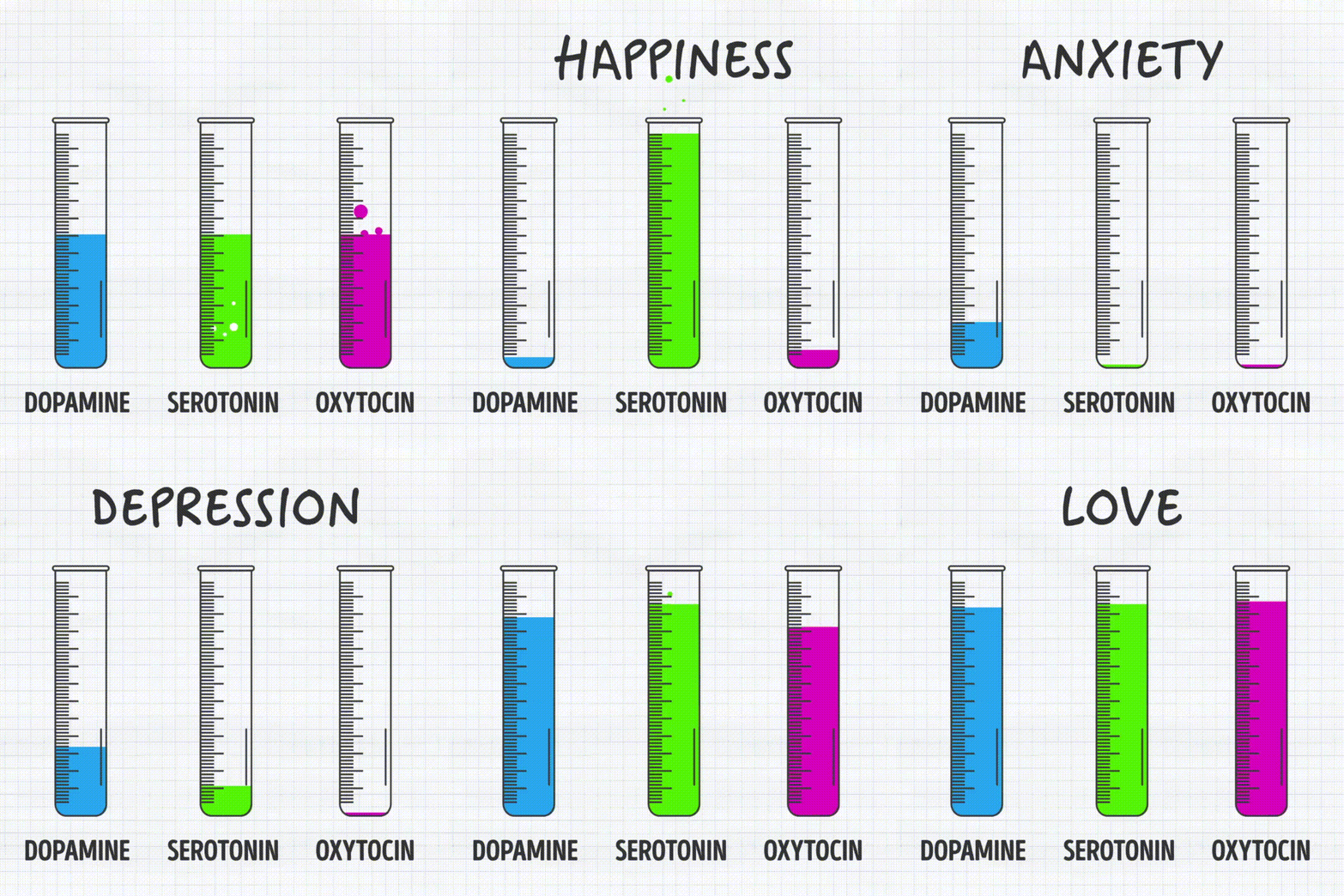
10 Do to the stimulation caused by a person’s surroundings; ones body produces different hormones which effect a person’s emotions and behavior.
11 Example:
The chemicals released in the stages of love, lust, attraction and attachment.
Lust: Estrogen and Testosterone
During lust, sex hormones are released, testosterone in men and estrogen in women, which inevitably increases sex drive. Increased testosterone levels make men more aggressive, but the effects of estrogen are much more complex.
Attraction: Adrenaline
Adrenaline is released as part of your bodies fight or flight response. It is responsible for the fast beating of the heart and consequently blushing and butterflies in your stomach. When one experiences this it is confused with fear at times but allows one to be more alert and react faster.
Attraction: Dopamine
Dopamine has a number of effects on a person in love. It is thought to be responsible for the lack of appetite and sleep experienced at this stage. And also increased energy levels.
Attraction: Serotonin
The release of serotonin triggers your brain's reward system. This leaves you overwhelmingly fixated on the person in question, and is why you can’t stop thinking about them.
Oxytocin: Attachment
Oxytocin is popularly known as the cuddle or love hormone. Although not much is known about it, it is speculated that it levels increase during skin contact and may induce sleepiness due to its calming effects.
12 What outside faculties are there beyond the ones known by man? There exist so may frequencies and vibrations of energy and the human body can naturally sense only a few. These forces influence our surroundings and ultimately has an influence on us. Let's take the force of magnetism. We as products of the earth have a sense for the natural magnetism of the earth. Humans have long forgotten how to use the senses necessary to sense this natural magnetism. Many creatures still possess and heavily rely on this ability to sense the magnetism of the earth. This is indeed how many creatures navigate the vast area they consider their habitat. A messenger pigeon displays problems navigating a trusted route if one secretly attaches a small magnet to its head.